Join us as we celebrate our hardworking watercraft inspectors and the end of another season…
32nd Annual 3rd Grade Field Day – May 2025
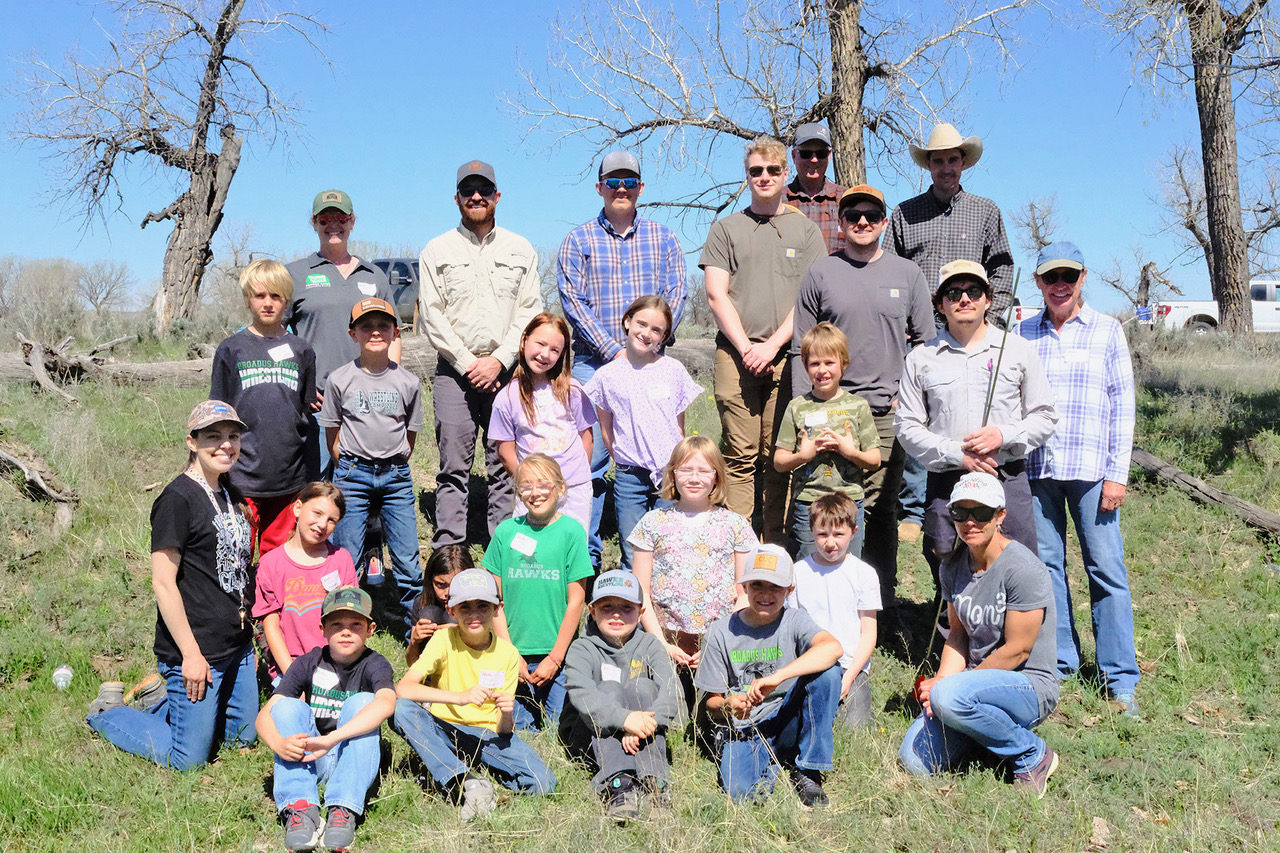
What a day! Taking advantage of the lovely spring weather, Mrs. Zellers’ third grade class was treated to a day of learning and fun. The class, along with parent volunteers, CeeCee Kolka, Kathy Ryan, and Jordan Wolfe, learned various conservation and historical concepts at the 32nd Annual 3rd Grade Field Day! Presented by the Powder River Conservation District (PRCD) in collaboration with volunteers from the PRCD, Montana Fish, Wildlife and Parks, the Natural Resources Conservation Service (NRCS), and American Bird Conservancy.
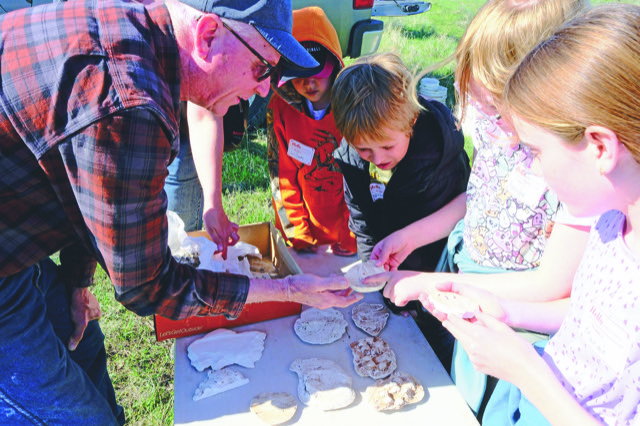

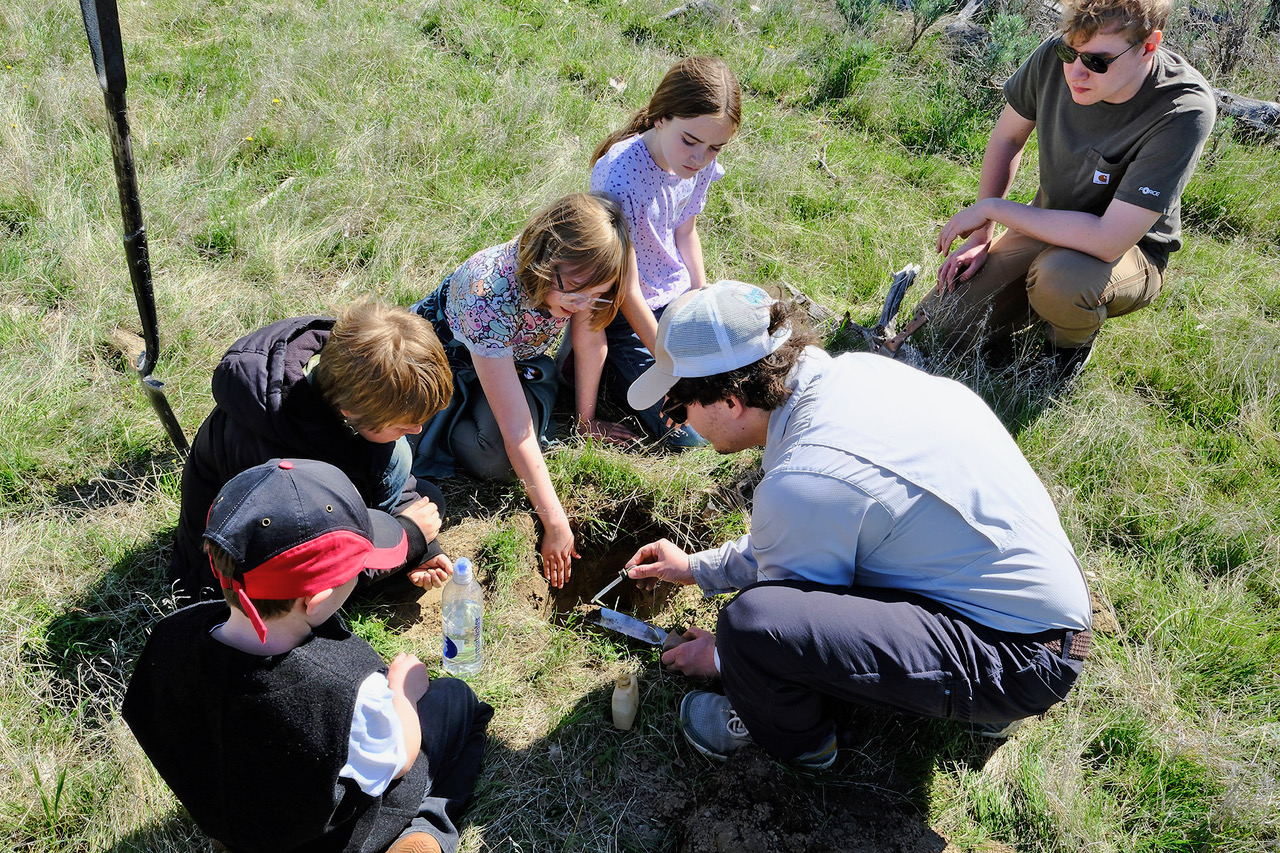



PRCD Rural Supervisor, Gene Smith showed the class various wildlife tracks and how to preserve them using plaster of Paris. The students were even able to create casts of their own handprints to take home! Quinn Lively, Resource Soil Scientist from Miles City and Angel Vega, Ecological Site Specialist from the Miles City MLRA Soil Survey Office, got down and dirty. Letting the kids texture soil and learn how to differentiate various soil types.
Zach Jensen, Rangeland Management Specialist of the Miles City Natural Resources Conservation Service (NRCS) office, showed the class what arrowheads and various other hunting artifacts one looks for when surveying an area for pipelines and other soil disturbances. He taught them how the use of percussion or pressure was used to create the points. After discussing how early indigenous hunters created weapons and tools, he taught them how to throw an atlatl! It was surprising how effective the kids were with this weapon. No gatherers here. Nate Reid, partner from American Bird Conservancy, had the students peer through a spotting scope to identify native bird species. He discussed the various adaptations birds undertake to better consume their chosen food source. To demonstrate this concept, he had the students roll to see what ‘beak’ they would end up with, then use it to capture food.
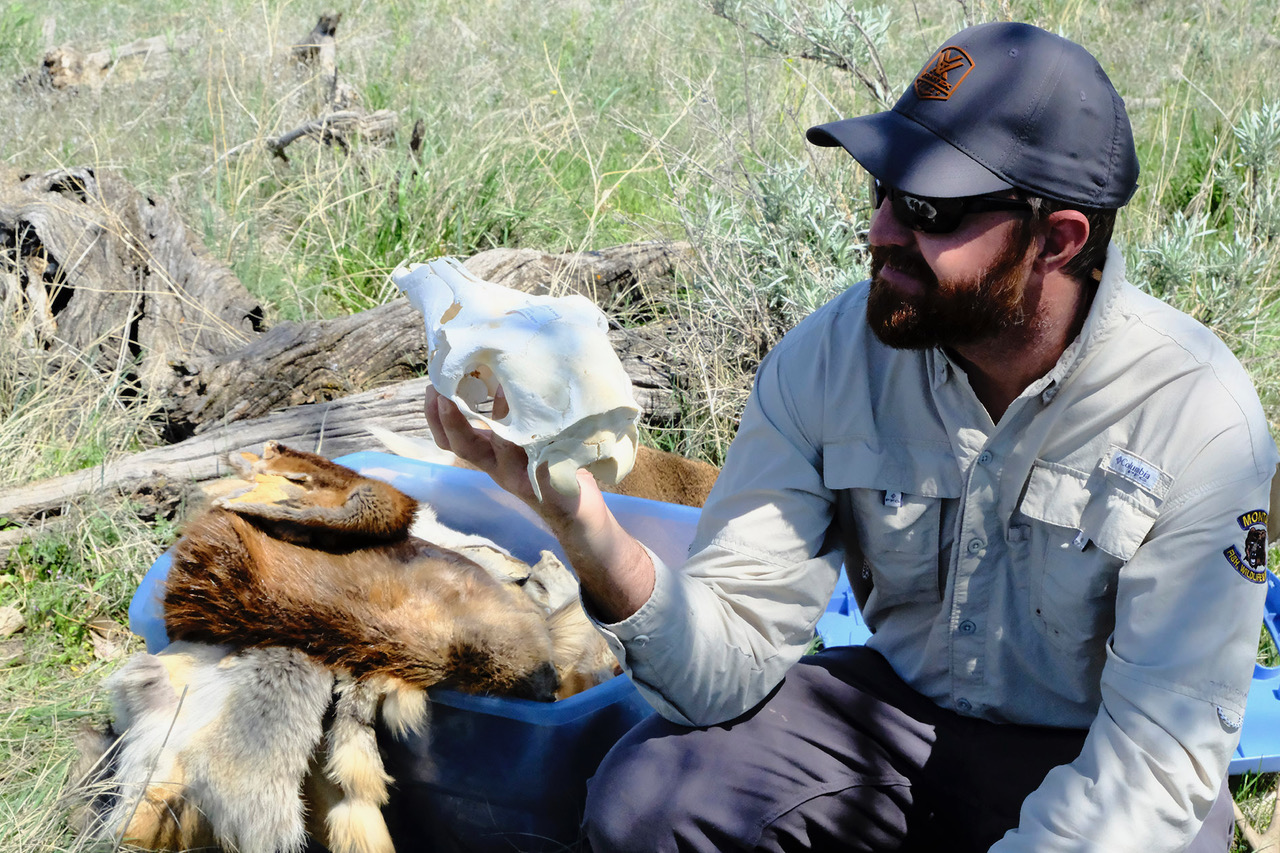
Seth Murnion, Soil Conservationist from the Miles City NRCS office, introduced the class to the noxious weed, leafy spurge. He had the students hunt for it in the field to test their observation skills. After identifying the plant and its noxious characteristics, the students created a weed web, effectively demonstrating how easily such plants can spread from one location to establish in another if proper precautions aren’t taken. The students were able to demonstrate their wildlife identification skills as Ryan DeVore, Fish, Wildlife, and Parks Game Biologist, showed them various skulls, hides, and antlers to identify.
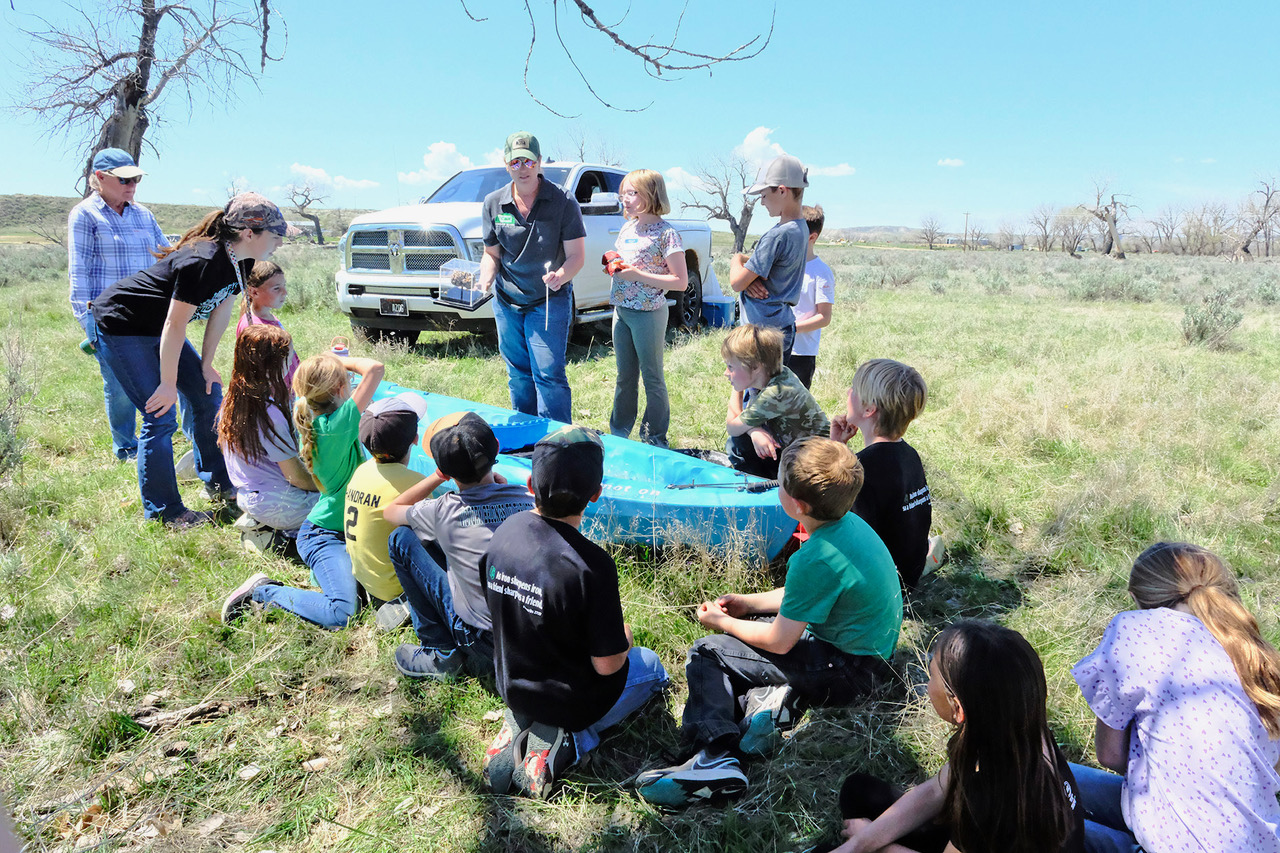
Finally, Jessica Beagles, District Administrator for the PRCD, showed the class a mussel encrusted piece of pipe, demonstrating how such small animals can overwhelm a space. To demonstrate how easily such hitchhikers can climb aboard, she submerged a toy boat in clean and then ‘infested’ water. The oregano from the infested water clung to the craft easily. She had the students replicate this by putting the price in glasses of water and having them submerge their fingers to see if the ‘aquatic invasive species (AIS)’ would stick to them. Then she had the class inspect a kayak for AIS. It was incredible to watch the class learn how hard one must look to fully inspect a watercraft. Following such a fun day, it was hard to leave the field.